Safety · Interactions with Matter
Photon interactions with matter: photoelectric, Compton & coherent
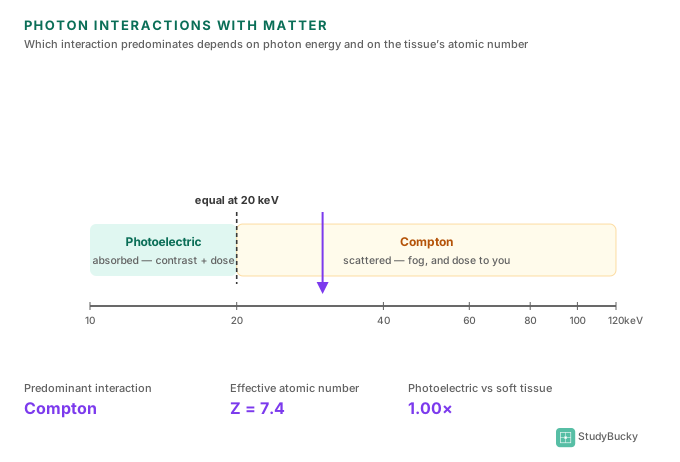
After x-rays leave the tube, photons interact in the patient. Three interactions matter on the registry: photoelectric (total absorption—contrast and patient dose), Compton (scatter—fog and your occupational exposure), and coherent (direction change, little diagnostic role). This diagram shows what each does and which wins as energy rises.
Photoelectric effect
The photon is totally absorbed; nothing continues as that photon. Needs at least the electron’s binding energy. Probability rises with Z³ (why bone/contrast media show up) and falls steeply with energy (1/E³).
Compton scatter
The photon deflects, loses energy, and ionizes the atom. Largely independent of Z—so it doesn’t create subject contrast; it fogs the image and irradiates the room. Probability falls more slowly with energy (≈1/E) than photoelectric.
Coherent (classical) scatter
Low-energy, change of direction without ionization/energy transfer. Minor in the diagnostic range.
Which interaction predominates
As kVp rises, photoelectric falls off faster than Compton, so Compton’s share grows even though both decline—classic “higher kVp, longer gray scale / more scatter fog” reasoning. Soft-tissue crossover talk (~20 keV in many teaching models) is a study aid; exam stems care about the trend and the consequences (contrast vs scatter).
Frequently asked questions
Which photon interaction is responsible for radiographic contrast?
The photoelectric effect—total absorption that varies strongly with atomic number (Z³). Compton does not provide subject contrast; it adds fog.
Where does most occupational exposure in fluoroscopy come from?
Compton scatter from the patient. That is why distance, shielding, and scatter control matter.
Why does raising kVp reduce contrast and increase the relative importance of Compton?
Photoelectric probability falls much faster with energy than Compton, so a larger share of remaining interactions are Compton scatter, which lengthens gray scale and adds fog.
Interactive diagram
Free layer covers the three interactions and dominance trends. Unlock full access to scrub energy/tissue and linked practice.